
Treatment of Hair and Nail Disorders in Tucson
Hair Loss and Scalp Disorders
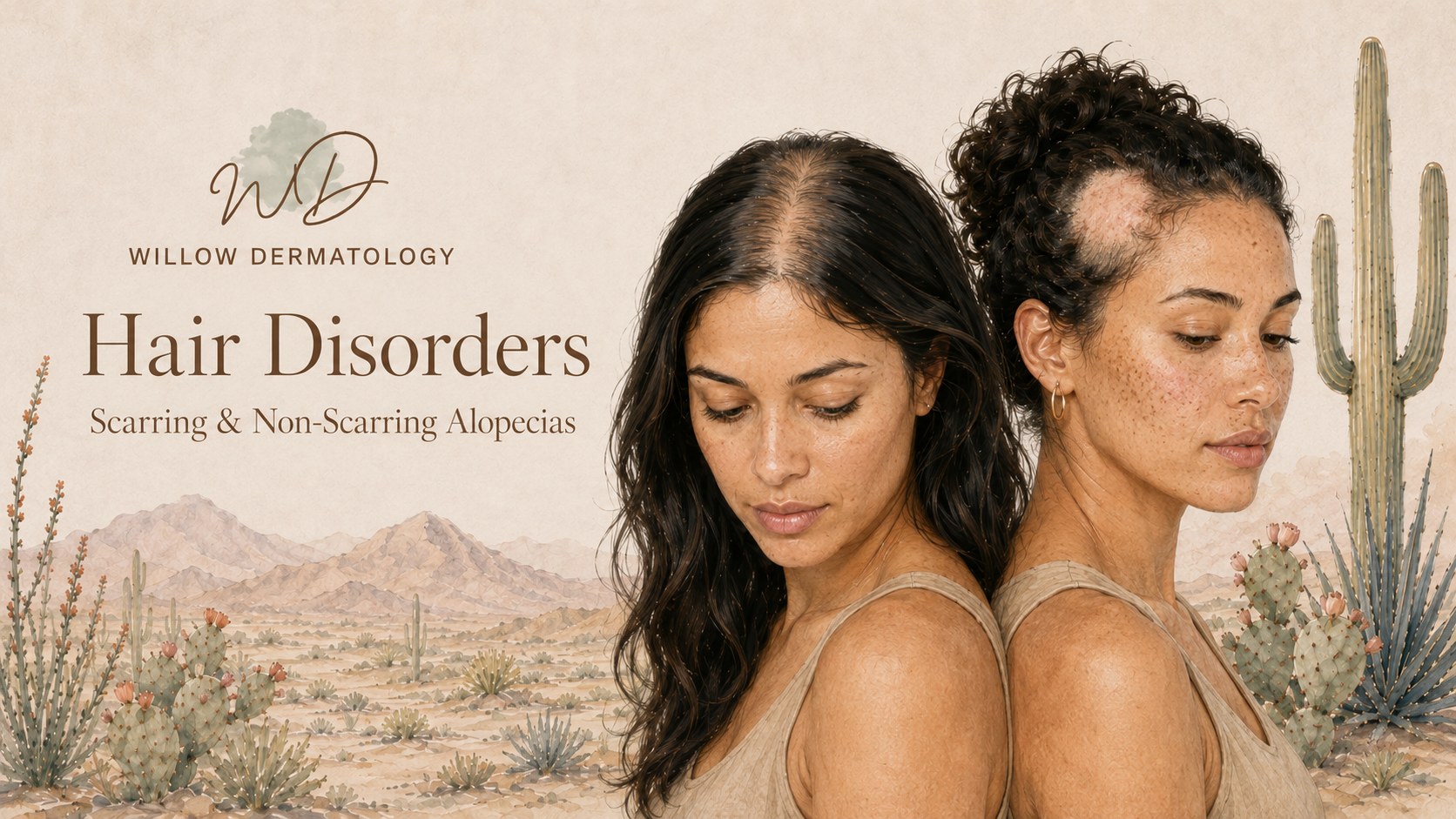
Hair loss may be classified as either non-scarring alopecia, in which the hair follicles remain intact and regrowth may be possible, or scarring alopecia, in which inflammation can permanently damage the follicles. Early evaluation is particularly important when a scarring form of hair loss is suspected.
Non-scarring alopecias include common conditions such as androgenetic alopecia, also known as male or female pattern hair loss, telogen effluvium, alopecia areata, traction alopecia in its earlier stages, and hair loss related to illness, stress, medications, hormonal changes, or nutritional deficiencies.
Scarring alopecias are inflammatory disorders that can cause permanent hair loss if follicular damage progresses. These include lichen planopilaris, frontal fibrosing alopecia, central centrifugal cicatricial alopecia, discoid lupus erythematosus, and other less common conditions. Symptoms may include scalp itching, burning, tenderness, redness, scaling, or smooth areas where follicular openings are no longer visible.
Evaluation may include a detailed medical and family history, examination of the hair and scalp with magnification, review of medications, laboratory testing, fungal testing, or a scalp biopsy when needed. Treatment is individualized and may include topical or injected medications, oral therapies, minoxidil, treatment of underlying medical conditions, and other approaches intended to reduce inflammation, slow further hair loss, and encourage regrowth when possible.
Dr. Mahdieh Jedlowski and Dr. Mohammad Fazel have experience evaluating both common and complex causes of hair loss. Their goal is to identify the underlying diagnosis, begin treatment early when necessary, and develop a practical long-term plan for maintaining scalp and hair health.
Nail Disorders
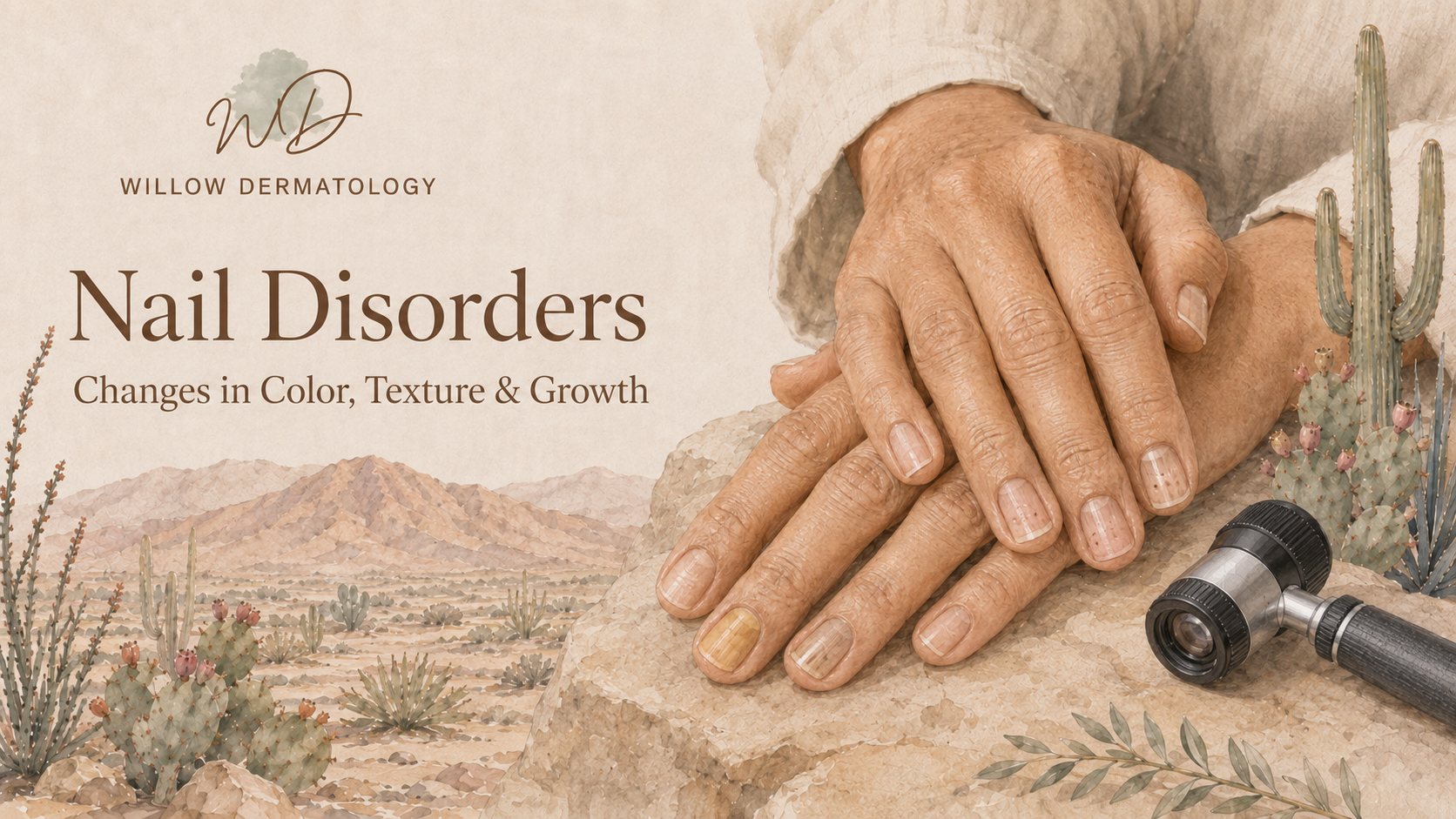
Changes in nail color, shape, thickness, texture, or growth can result from infection, inflammation, repeated trauma, skin disease, medications, or underlying medical conditions. We evaluate concerns including fungal nail infections, brittle or splitting nails, ingrown nails, nail psoriasis, inflammatory nail disease, discoloration, abnormal growth, and lesions involving the nail unit.
Because nail disorders often develop slowly and may appear similar, testing such as nail clippings, fungal studies, cultures, or a biopsy may occasionally be recommended before treatment begins. Treatment is selected according to the diagnosis and may include topical or oral medications, injections, procedural care, and strategies to protect the nail while healthy growth gradually returns.
New or changing dark pigmentation beneath a nail, persistent bleeding, unexplained nail destruction, or a growth involving the nail should be evaluated promptly to exclude a more serious condition.