
Dermatologists Treating Merkel Cell Carcinoma in Tucson
What Is Merkel Cell Carcinoma?
Merkel cell carcinoma is a rare and aggressive form of skin cancer. It most commonly develops on sun-exposed areas such as the head, neck, arms, and legs.
Unlike many common skin cancers, Merkel cell carcinoma can grow quickly and may spread early to nearby lymph nodes or other organs. It also has a meaningful risk of returning after treatment. Prompt diagnosis, accurate staging, and coordinated care are therefore essential.
Risk is higher among older adults, people with significant ultraviolet exposure, and patients with weakened immune systems. This includes organ transplant recipients and people with certain blood cancers or immune-suppressing medical conditions. However, Merkel cell carcinoma can occur in people of any skin tone and without obvious risk factors.
What Does Merkel Cell Carcinoma Look Like?
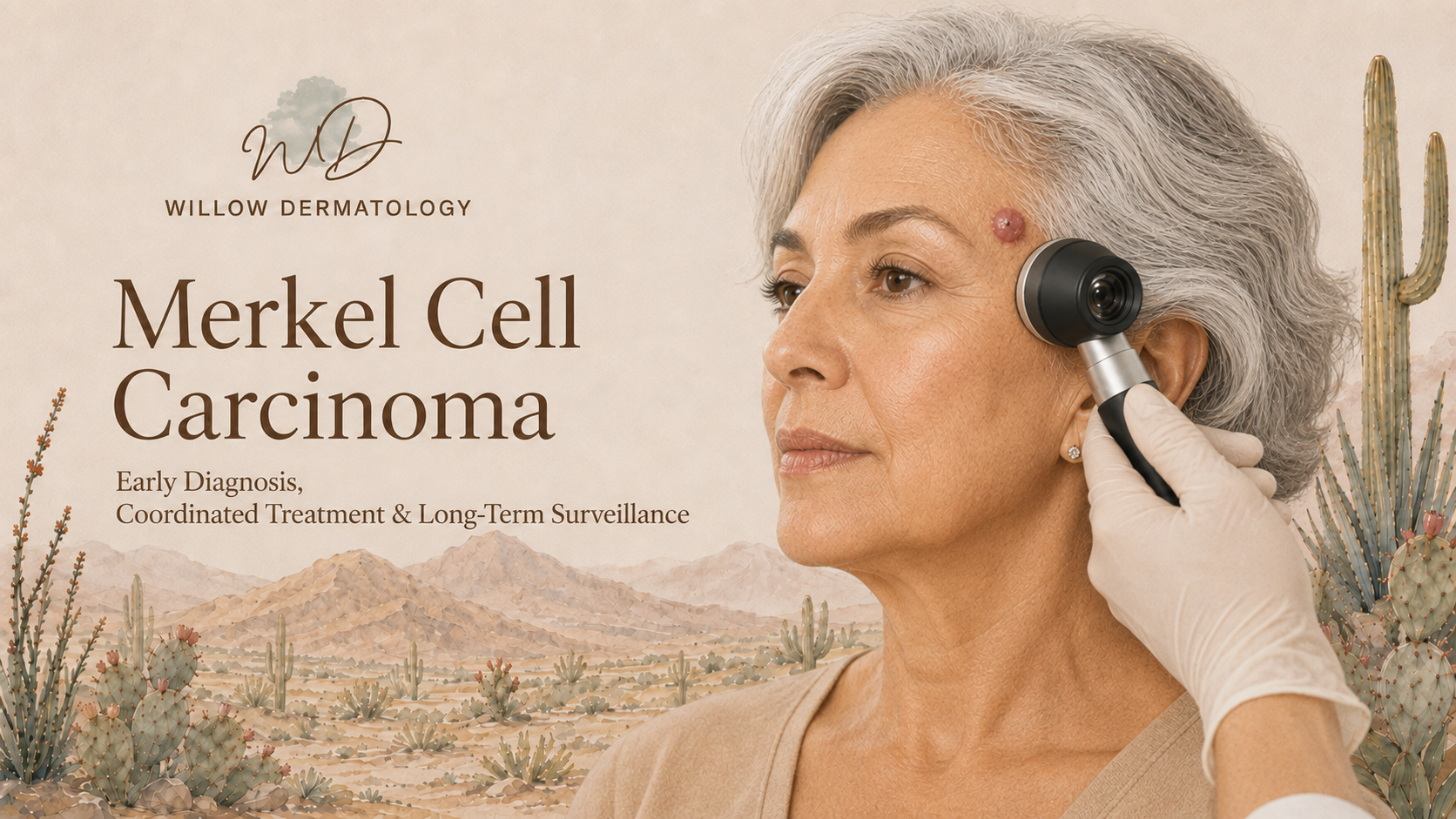
Merkel cell carcinoma most often appears as a single, rapidly growing bump on the skin. It may look like:
A firm, smooth, or shiny dome-shaped growth
A pink, red, purple, blue, or skin-colored bump
A painless growth that enlarges over several weeks or months
A spot resembling a cyst, insect bite, pimple, or sore
A growth that bleeds or develops surface breakdown as it enlarges
Merkel cell carcinoma frequently develops on the head or neck but can occur anywhere on the body. A painless appearance does not mean that a growth is harmless. Any new bump that is growing rapidly should be evaluated promptly by a dermatologist.
Diagnosis and Staging
Diagnosis begins with a careful skin and lymph node examination followed by a skin biopsy. Because Merkel cell carcinoma can resemble several other tumors under the microscope, specialized laboratory stains are usually used to confirm the diagnosis.
Once the diagnosis is established, additional testing is often needed to determine whether the cancer has spread beyond the skin. Staging may include a detailed lymph node examination, imaging, and a sentinel lymph node biopsy.
A sentinel lymph node biopsy evaluates the first lymph node or group of lymph nodes most likely to receive cancer cells from the original tumor. This procedure may detect microscopic spread even when the lymph nodes do not feel enlarged. When possible, lymph node staging and definitive surgery are carefully coordinated as part of the initial treatment plan.
Treatment Options
Merkel cell carcinoma treatment is individualized according to the tumor’s size, location, stage, lymph node findings, and the patient’s overall health. Because treatment commonly involves several specialties, care may be coordinated among dermatologic surgery, surgical oncology, radiation oncology, and medical oncology.
Wide local excision is commonly used to remove a localized Merkel cell carcinoma along with a measured margin of surrounding tissue. Reconstruction is planned according to the size and location of the resulting surgical defect.
Sentinel lymph node biopsy is often performed for patients without clinically enlarged lymph nodes. If cancer is identified within a lymph node, additional treatment to the regional lymph nodes may be recommended.
Radiation therapy may be recommended after surgery to reduce the risk of the cancer returning at the original site or within nearby lymph nodes. Radiation may also be used as a primary treatment when surgery is not appropriate or as part of treatment for recurrent or advanced disease.
Lymph node surgery or regional radiation therapy may be considered when Merkel cell carcinoma has spread to nearby lymph nodes. The appropriate approach depends on the number and location of involved nodes and other individual factors.
Immunotherapy may be recommended for Merkel cell carcinoma that is advanced, recurrent, or has spread to distant areas. These medications help the immune system recognize and attack cancer cells. Clinical trials may also provide access to emerging treatment approaches.
Coordinated Cancer Care
Treatment planning for Merkel cell carcinoma should address both the visible skin tumor and the possibility of microscopic disease elsewhere in the body. Early coordination helps ensure that surgery, lymph node staging, radiation therapy, and systemic treatment are performed in the appropriate sequence.
Willow Dermatology works with the patient’s broader cancer care team to support diagnosis, surgical planning, referral, surveillance, and communication throughout treatment.
Follow-Up and Surveillance
Close follow-up is important because Merkel cell carcinoma can return in the skin, lymph nodes, or other organs. Surveillance recommendations are individualized according to the tumor’s stage, treatment, immune status, and other risk factors.
Follow-up may include frequent skin and lymph node examinations, periodic imaging when appropriate, and careful monitoring of the original treatment area. Patients should regularly examine their skin and promptly report any new growth, rapidly enlarging bump, swelling beneath the skin, or change near the previous tumor site.
Broad-spectrum sunscreen, protective clothing, shade, and avoidance of tanning beds can reduce additional ultraviolet damage. Patients with immune suppression should maintain close communication with both their dermatology and medical care teams.
If you notice a new painless bump that is growing rapidly, particularly on a sun-exposed area, schedule a dermatologic evaluation promptly.